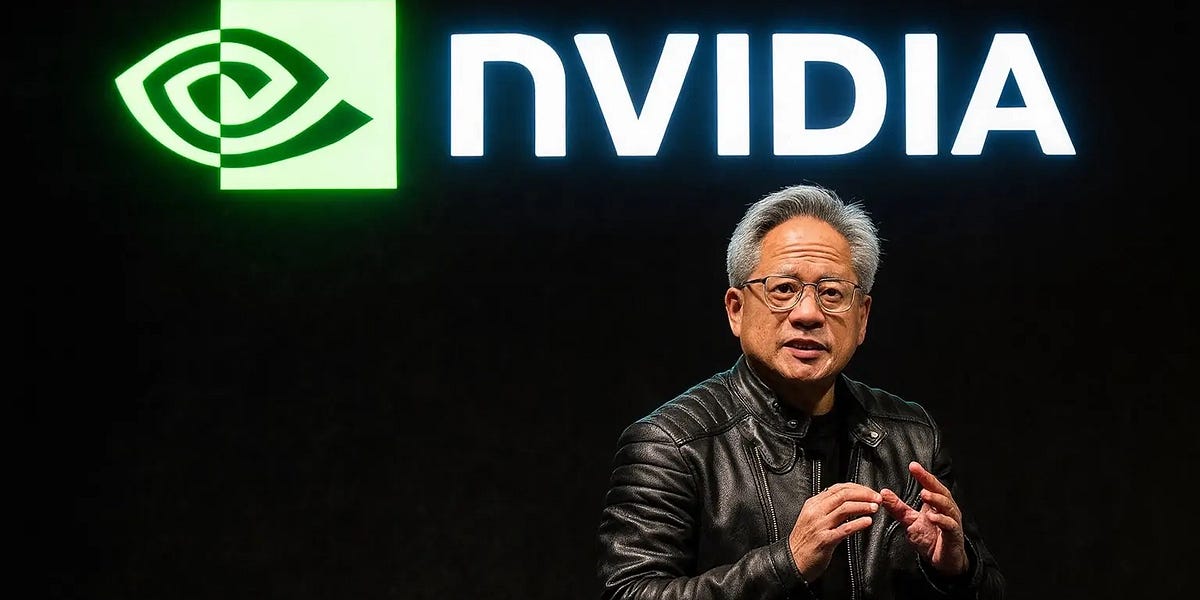
On November 20, 2025, trading algorithms identified what may become the largest accounting fraud in technology history—not in months or years, but in 18 hours.
Looks more and more like a vulgar Ponzi scheme. Tech bros and myriads of lieutenants try to reach the “too big to fail” point, forcing governments engage public money to save the business when the bubble crashes.
Brilliant.
We live in a time when it’s hard to force governments.
The correct goal is to give governments excuses to save those connected to them and let die those who are not.
USSR’s breakup and the dotcom bubble started a new era. Everyone saw that this works and there’s no higher wisdom or hidden fallback mechanism to prevent this.
But the incentive to “save businesses” is, well, why I’m a libertarian most of the time. If governments had no money to be directed by some central strategy, and instead only the means to minimally function as publicly decided - fire services, infrastructure, electoral procedures, IDs and money, - then there would be no option to involve them in such a way.
And it makes sense that libertarians are usually very vulnerable to the AI hype, as to the cryptocurrencies hype before it, an irony typical for history. That means that they’ll be those hit the most.
It’s an intended minefield. There’s a road called “techno-optimism and individualism”, and most of the mines are being laid on it. Similar to the KGB “rotten herring” thing and such. To discredit an idea. It’s more believable when the splattered meat around those already exploded is real.
Again, look at USSR, its ideology had plenty of flaws, some with pretty infernal consequences, but it was the main one putting future united humanity, progress, science, equality, humanism and secularism into the center of its cosmology. It offered pretty dubious tools, but that’s irrelevant. When it failed, all those things listed also got a hit. It’s not a coincidence that “polemical” (with both dystopia and utopia and questions about human nature put together in the same space) science fiction in the 90s transitioned into clearly dystopian “putrid” “dream denied” cyberpunk.
You mean the central strategy of creating the money, imposing capitalism, and violently enforcing extreme privilege/deprivation?
Usually capitalism doesn’t need to be imposed.
Even so called “traditional economy” involves violence as a means of constricting it, but is otherwise similar to capitalism. It’s just that a medieval village dies if its smith doesn’t make needed tools in time, isn’t big enough for two smiths to compete, so if such a competition happens both will simply die of hunger. So all competition in “traditional economy” setting would be first validated by social mechanisms like elders of a village agreeing or being allowed by the guild, if in a town. And so on.
“Capitalism” is what you get when you take that traditional economy and the newly arrived need for mobile labor resources - workers for the factories, laborers for big farms, and so on. You need a socio-economic system where a smith’s son can be a carpenter and vice versa, and both can be recruited and made soldiers.
In the traditional economy there’s no such mobility because there’s no need. Cases where you change places are something exceptional, rare enough to be decided by authority to allow or not. People living in such societies would think you’re as good as a thief if you tried to compete with their local hereditary smith or carpenter. They’d punish you as a thief.
Another thing similar to capitalism, but with constrictions backed by violence, is socialism.
In that thing a group of virtuous well-meaning revolutionaries breaks the society over their collective knee in order to make it closer to an utopian idea, and then basically builds state capitalism with them and their descendants on top.
You don’t have to enforce privilege and deprivation. The victim’s position is disadvantaged by definition.
Because they’re already disconnected from reality and worshiping an obvious pseudo-science?
No, libertarian philosophy is the only thing that didn’t go up in flames for me through experience, of what I liked from time to time in my life.
It feels somewhat general and stupid, a bit like Tao Te Ching. Tao Te Ching is respected and libertarianism is not. Well, except for China, where it’s the other way around, because Taoism is associated with the century of humiliations and libertarianism is what they approximate with some additional steps.
I also wouldn’t say conversational dataset-based systems are obvious pseudo-science when you know what they are and are not trying to replace people with them. And cryptocurrencies have their valid uses.
You should ask yourself a question - is the Web a scam? Right after the dotcom bubble and during that - much of it was.
For real? China is approximately libertarian? I’m not here to say China is worse than most others but it has a massive state surveillance operation. There is rampant censorship of opinions and media. The penalties for drug possession are severe. The economy is heavily influenced by the government if not centrally run. It seems pretty far from libertarianism.
but it was the main one putting future united humanity, progress, science, equality, humanism and secularism into the center of its cosmology
Just llike with many people, what they say and what they do can be two very different things.
In the USSR’s case, they talked socialism while being totalitarian state capitalists. This was even noted at the time of the Russian revolution by people such as Rosa Luxemburg. And in terms of its foreign policy, they talked internationalism and cooperation while carrying on the legacy of Russian imperialism.
When it failed, all those things listed also got a hit.
All those things also took a hit at the end of WW1, in the Great Depression, and during WW2. Nobody who was paying attention believed the Russian bullshit, before or after the collapse of the Communist Party’s rule. The double-dealing in the Spanish Civil War, the Molotov-Ribbentrop pact, the crushing of the Prague Spring, and many other events put paid to that naivety.
Just llike with many people, what they say and what they do can be two very different things.
Yes, for my specific point here what they say matters and not what they do.
they talked socialism while being totalitarian state capitalists. This was even noted at the time of the Russian revolution by people such as Rosa Luxemburg.
I prefer “red fascism” over “state capitalism” for USSR until the Thaw. After the Thaw it was more of state capitalism, yes.
All those things also took a hit at the end of WW1, in the Great Depression, and during WW2.
Yes, but the way WW2 ended was a push in the opposite direction. Or it wasn’t, but 20 years later, when some of the ruins were rebuilt, it was retrospectively presented as that and the future as bright and peaceful.
Nobody who was paying attention believed the Russian bullshit, before or after the collapse of the Communist Party’s rule.
I mean, you shouldn’t say those things from a different time and a different context.
Much of the Soviet bullshit that many people in the west still take for truth isn’t accepted in ex-USSR and vice versa.
Much of what inside USSR itself was considered bullshit got a new life in the 60s, when a somewhat romantic view became common that there is some virtuous root of revolution that one can find from that nasty place in which the country was then. It was sort of a rebellion against Soviet reality of that time, but it was also a rebirth of its worldview. World revolution was replaced with progress, peace, socialism, yadda-yadda, ideologically correct science and weeding out enemies of the people were replaced with perception of the cold war and space race as of something that will eventually lead to friendship and unification, and pretty typical militarism was replaced with melancholic pacifism, memory of those “fallen to preserve life itself”, pictures of some transcendent emotion unifying the whole world - some sort of spring air and night sky feeling, I can’t even explain it, but I’ve got my share.
It’s a very potent aesthetic, and very young in feeling. I don’t even think it was bad. Unfortunately, it was all purely emotional. And, anyway, many of the people who contributed to that cultural movement were dissidents 20 years later.
But - much of what seems to have always been obviously untrue or true was a reasonable claim for many people 20 years ago.
You can’t believe what you think you clearly see from today. Not without lots of physical proof.
And things that seem small and trivial from far away could have looked quite big and real for those living them.


Looks more and more like a vulgar Ponzi scheme. Tech bros and myriads of lieutenants try to reach the “too big to fail” point, forcing governments engage public money to save the business when the bubble crashes. Brilliant.
We live in a time when it’s hard to force governments.
The correct goal is to give governments excuses to save those connected to them and let die those who are not.
USSR’s breakup and the dotcom bubble started a new era. Everyone saw that this works and there’s no higher wisdom or hidden fallback mechanism to prevent this.
But the incentive to “save businesses” is, well, why I’m a libertarian most of the time. If governments had no money to be directed by some central strategy, and instead only the means to minimally function as publicly decided - fire services, infrastructure, electoral procedures, IDs and money, - then there would be no option to involve them in such a way.
And it makes sense that libertarians are usually very vulnerable to the AI hype, as to the cryptocurrencies hype before it, an irony typical for history. That means that they’ll be those hit the most.
It’s an intended minefield. There’s a road called “techno-optimism and individualism”, and most of the mines are being laid on it. Similar to the KGB “rotten herring” thing and such. To discredit an idea. It’s more believable when the splattered meat around those already exploded is real.
Again, look at USSR, its ideology had plenty of flaws, some with pretty infernal consequences, but it was the main one putting future united humanity, progress, science, equality, humanism and secularism into the center of its cosmology. It offered pretty dubious tools, but that’s irrelevant. When it failed, all those things listed also got a hit. It’s not a coincidence that “polemical” (with both dystopia and utopia and questions about human nature put together in the same space) science fiction in the 90s transitioned into clearly dystopian “putrid” “dream denied” cyberpunk.
You mean the central strategy of creating the money, imposing capitalism, and violently enforcing extreme privilege/deprivation?
Because they’re already disconnected from reality and worshiping an obvious pseudo-science?
Usually capitalism doesn’t need to be imposed.
Even so called “traditional economy” involves violence as a means of constricting it, but is otherwise similar to capitalism. It’s just that a medieval village dies if its smith doesn’t make needed tools in time, isn’t big enough for two smiths to compete, so if such a competition happens both will simply die of hunger. So all competition in “traditional economy” setting would be first validated by social mechanisms like elders of a village agreeing or being allowed by the guild, if in a town. And so on.
“Capitalism” is what you get when you take that traditional economy and the newly arrived need for mobile labor resources - workers for the factories, laborers for big farms, and so on. You need a socio-economic system where a smith’s son can be a carpenter and vice versa, and both can be recruited and made soldiers.
In the traditional economy there’s no such mobility because there’s no need. Cases where you change places are something exceptional, rare enough to be decided by authority to allow or not. People living in such societies would think you’re as good as a thief if you tried to compete with their local hereditary smith or carpenter. They’d punish you as a thief.
Another thing similar to capitalism, but with constrictions backed by violence, is socialism.
In that thing a group of virtuous well-meaning revolutionaries breaks the society over their collective knee in order to make it closer to an utopian idea, and then basically builds state capitalism with them and their descendants on top.
You don’t have to enforce privilege and deprivation. The victim’s position is disadvantaged by definition.
No, libertarian philosophy is the only thing that didn’t go up in flames for me through experience, of what I liked from time to time in my life.
It feels somewhat general and stupid, a bit like Tao Te Ching. Tao Te Ching is respected and libertarianism is not. Well, except for China, where it’s the other way around, because Taoism is associated with the century of humiliations and libertarianism is what they approximate with some additional steps.
I also wouldn’t say conversational dataset-based systems are obvious pseudo-science when you know what they are and are not trying to replace people with them. And cryptocurrencies have their valid uses.
You should ask yourself a question - is the Web a scam? Right after the dotcom bubble and during that - much of it was.
For real? China is approximately libertarian? I’m not here to say China is worse than most others but it has a massive state surveillance operation. There is rampant censorship of opinions and media. The penalties for drug possession are severe. The economy is heavily influenced by the government if not centrally run. It seems pretty far from libertarianism.
Just llike with many people, what they say and what they do can be two very different things.
In the USSR’s case, they talked socialism while being totalitarian state capitalists. This was even noted at the time of the Russian revolution by people such as Rosa Luxemburg. And in terms of its foreign policy, they talked internationalism and cooperation while carrying on the legacy of Russian imperialism.
All those things also took a hit at the end of WW1, in the Great Depression, and during WW2. Nobody who was paying attention believed the Russian bullshit, before or after the collapse of the Communist Party’s rule. The double-dealing in the Spanish Civil War, the Molotov-Ribbentrop pact, the crushing of the Prague Spring, and many other events put paid to that naivety.
Yes, for my specific point here what they say matters and not what they do.
I prefer “red fascism” over “state capitalism” for USSR until the Thaw. After the Thaw it was more of state capitalism, yes.
Yes, but the way WW2 ended was a push in the opposite direction. Or it wasn’t, but 20 years later, when some of the ruins were rebuilt, it was retrospectively presented as that and the future as bright and peaceful.
I mean, you shouldn’t say those things from a different time and a different context.
Much of the Soviet bullshit that many people in the west still take for truth isn’t accepted in ex-USSR and vice versa.
Much of what inside USSR itself was considered bullshit got a new life in the 60s, when a somewhat romantic view became common that there is some virtuous root of revolution that one can find from that nasty place in which the country was then. It was sort of a rebellion against Soviet reality of that time, but it was also a rebirth of its worldview. World revolution was replaced with progress, peace, socialism, yadda-yadda, ideologically correct science and weeding out enemies of the people were replaced with perception of the cold war and space race as of something that will eventually lead to friendship and unification, and pretty typical militarism was replaced with melancholic pacifism, memory of those “fallen to preserve life itself”, pictures of some transcendent emotion unifying the whole world - some sort of spring air and night sky feeling, I can’t even explain it, but I’ve got my share.
It’s a very potent aesthetic, and very young in feeling. I don’t even think it was bad. Unfortunately, it was all purely emotional. And, anyway, many of the people who contributed to that cultural movement were dissidents 20 years later.
But - much of what seems to have always been obviously untrue or true was a reasonable claim for many people 20 years ago.
You can’t believe what you think you clearly see from today. Not without lots of physical proof.
And things that seem small and trivial from far away could have looked quite big and real for those living them.